
Quad Core Vs Octa Core
Have you ever wanted to know more about which one is best like Quad Core Vs Octa Core, or which core will affect the performance or even just what are the different types of cores to choose from?

Lets, get to the details and know more about them and start with what is a core
2026 Update: How This Has Changed
This article was originally written in 2019. The core principles still hold — but the processor landscape has changed significantly. We’ve updated this section with current real-world examples so you can make a better decision today.
When we first wrote this comparison, a quad-core processor was still considered a premium feature in mid-range phones, and octa-core was the badge of honour on spec sheets. In 2026, that framing is almost irrelevant — and understanding why will save you from making a bad buying decision.
Core count no longer tells the whole story
The biggest shift since 2019 is that chipmakers stopped treating all cores equally. ARM’s big.LITTLE architecture — which pairs high-performance “big” cores with energy-efficient “little” cores — has become the standard across every price range. So when a budget phone advertises “octa-core,” it often means eight weak Cortex-A55 cores running at 1.8 GHz. When a flagship advertises the same octa-core label, it means something entirely different: a mix of ultra-powerful Cortex-X4 or custom Oryon cores alongside efficient cores, operating at very different clock speeds.
The honest comparison is no longer quad vs octa — it’s which cores, at what speed, on what process node. Two phones can both say “octa-core” on the box and perform completely differently.
What the top processors look like in 2026
To give you a concrete sense of how far things have moved, here’s what the current flagship chips actually look like under the hood:
| Chipset | Core Setup | Real-World Context |
| Snapdragon 8 Elite Gen 5 (Qualcomm) | 8 custom Oryon cores, 3nm process | Currently the fastest Android chip. Found in Xiaomi 17 Pro, Red Magic 11 Pro. Peaks at 4.6 GHz. |
| Dimensity 9500 (MediaTek) | All-big-core architecture, 3nm | Close rival to Snapdragon. Strong multi-core, excellent efficiency. Found in Vivo X300 Pro. |
| Apple A19 Pro | 6-core design (not octa), 3nm | Proves core count is irrelevant — 6 cores beat most 8-core Android chips in single-core tasks. |
| Exynos 2600 (Samsung) | 8 cores, world’s first 2nm chip | Samsung’s internal chip for Galaxy S26 series. Strongest GPU in the segment. |
| Snapdragon 7 Gen 4 (mid-range) | 8 cores, 4nm process | Upper mid-range. Handles gaming, multitasking well. Found in Oppo Reno 15, Motorola Edge 70. |
Notice that Apple’s A19 Pro uses only 6 cores yet outperforms most octa-core Android chips in single-threaded tasks. This is exactly why core count alone is a misleading spec.
So does octa-core still beat quad-core in 2026?
For smartphones: quad-core as a standalone architecture is essentially gone from the mainstream market. You’ll find it in a handful of entry-level devices below $80, but every meaningful phone from $150 upwards now ships with at least 6 cores, and usually 8.
For PCs and laptops: Intel and AMD have moved well beyond the quad/octa divide. Modern consumer processors range from 8 to 24 cores (Intel Core Ultra 9 285K, AMD Ryzen 9 9950X), with gaming performance increasingly driven by single-core speed and cache size rather than raw core count.
The bottom line: if you are comparing two phones today and one has a quad-core chip, it is almost certainly a budget or older device regardless of what the marketing says. Octa-core is the baseline in 2026 — the real comparison is the chipset generation and the core architecture, not the number.
What actually matters when buying a phone in 2026
- Process node — 3nm is current flagship standard; 4nm is solid mid-range; 6nm and above is older or budget
- Benchmark scores — AnTuTu and Geekbench 6 give comparable, real numbers across brands
- Thermal performance — a chip that throttles under load is worse than a slower chip that doesn’t
- Software optimisation — a well-optimised phone with a “weaker” chip often outperforms a poorly-optimised flagship
- NPU (Neural Processing Unit) — AI tasks, photo processing, and on-device features increasingly depend on this, not the CPU cores
Core:
In the beginning when you start learning about computers first thing they teach us is about the processing unit or Central Processing Unit(CPU) as this is the main part of the computer system or you can say it as the brain of the computer, where all the transaction, instructions, functions, and many other tasks are performed.
Most of the earlier computers used to have this CPU on a single Integrated Circuit Chip along with the memory. The other (peripheral) device interfaces, and many other components. This chip including the CPU performs all the arithmetic and logical instructions. Thus it is the central unit that performs all the commands sent to ALU (arithmetic Logic Unit).
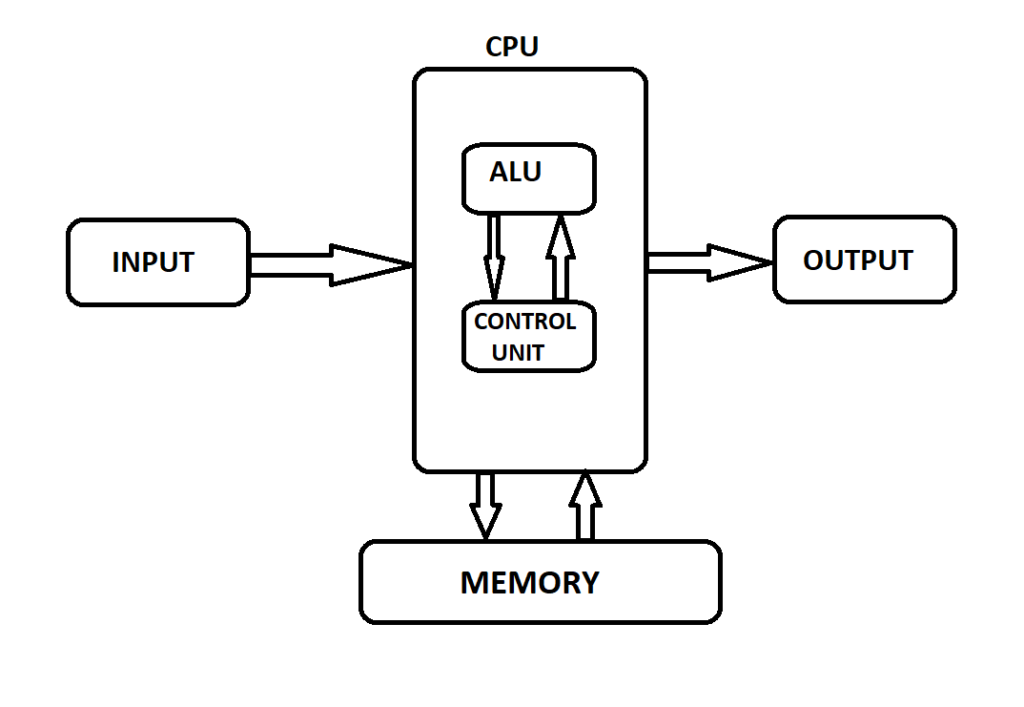
During the course of time, the processing of the data and handling of the instruction requirement has substantially increased. To support these requirements it has been designed to add two or more CPUs to that single chip or you can say more cores or multi-cores on a single chip.
If you talk about the basic functionalities of the core which are to Fetch the instruction, DECODE the instructions and Execute the instructions.
Now you got the definition of the core as a single CPU and similarly, multi-core could define as two or more CPUs.
Modern computers can accommodate these multi-core processors on a single socket, supported with single heat sink and fan to control the temperature. Let’s get into more details to see Quad Core vs Octa Core
Dual-Core, Quad-Core, Hexa and Octa-Core:
As we see that CPU or a core handles the instructions and processes them so more the cores then it can handle more instructions and processes. By the use of a multi-core processor, we can achieve the high performing functionalities like multi-threading or parallel computing.
So, when you want to purchase or build a computer consider which
multi-core processor to add to gain the extra speed and the improved functionality
of the computer.
In today’s market of processors, there are many companies competing each other but the leaders among them are Intel and AMD ( Advanced Micro Devices) and the other companies which mainly focus on the mobile and tablet are Snapdragon, MediaTek, Apple and Samsung.
| Intel Processor Model | AMD Processor Model | |
| Desktops | Celeron, Pentium, Core | Sempron, Athlon, Phenom |
| Mobile | Celeron M, Pentium M, Core mobile processor | Sempron, Athlon, Turion |
Single Core | Yes | Yes |
Mutli Core | Yes | Yes |
Models | · Intel Pentium Dual-core processor · Intel i3, i5, i7, and i9 Processors · Intel Xeon Processors | · AMD A4, A6, A8, A10 · AMD FX Processors · AMD Ryzen Processors · AMD Ryzen Threadripper Processor |
Each processor has multiple factors which determine the speed or the performance of the processor like
Clock Rate: Each processor has the clock rate, which is the frequency of the clock pulse to execute the instructions. Thus the higher the clock rate, the more instructions can be handled by the CPU. With the increased clock rate, you will have an increase in energy consumption, thus producing more heat. So when you are buying a computer with a higher clock rate look for the best cooling solution also.
Cache: Today’s modern CPUs have different levels of caches including Instruction cache or data caches. These caches are used to reduce the average cost by storing the copies of data which is most frequently accesses from the main memory. Acting as a bridge in between RAM and the processor.
Front Side Bus (FSB): It is a connector to the Random Access Memory, to determine the speed of the processor is determined by clock multiplier to the FSB. CPU speeds can vary with a different combination of different FSB frequency or the clock multiplier.
If you have a computer with a Dual-Core processor then it is like having two individual CPUs installed in one single chip which will handle more instructions at a time. Thus it will increase the performance from the normal Single core processor. And similarly
Quad-Core will have 4 cores on the single IC chip which is used to handle even more instructions and operations and similarly, the HEXA Core is with 6 cores. Unlike the QUAD Core, the Hexacore is not implemented in many devices.
Octa-Core as the name says it has 8 Cores and it has double the speed as the Quad Core processor has. So, the device with Octa-core can handle double the number of instructions that can be handled by Quad-Core.
Decision:
Whether you are upgrading your current PC or buying a new PC basic and the first criteria will be the budget, based on your budget look for the available best processor which will give you the speed performance for some years to come. Based on the factors we discussed Quad Core Vs Octa Core above will help you decide the new processor to purchase. For eg. The processor with the size of 3.5GHz is much more recommended over the processor of size 2.0GHz.
“If you’re buying a device for business use, check your budget with our EMI Calculator before deciding how much to spend on hardware.”
The amount of the Cache of the processor reflects the speed of the processor, more the size of Cache the more speed you can get from the processor. Go for the max available cache within your budget.
Note:
If you only want to change the processor look for the socket size of the processor as it is different for the different motherboards.And consider the heat sink and an appropriate fan to provide the required cooling.
For example the processor from intel
Intel i7 10th Gen up to 4.80GHz and 8M Cache https://www.intel.com/content/www/us/en/products/processors/core/i7-processors.html
It has 4.80GHz and an 8M of cache memory, which is one of the pretty good processors to consider.
Conclusion:
The multi-core processors dual, quad, Hexa or octa-core processor will increase the speed of your computer by performing multiple tasks subsequently. Along with the core look for the FSB, go for the higher FSB available within your budget. So, next time you purchase a new processor or a full set of PC we wish you have the best computing speed for years coming till the technology phases out.
If you like the post or find any little information helpful please share the post and send your comments to us it matters to us a lot.
“Once your device is set up, try our Free QR Code Generator to connect it to WiFi instantly or share links without typing.”
Frequently Asked Questions
Is octa-core always better than quad-core?
Not automatically — but in practice, yes for most purchases today. An octa-core chip from 2020 can still be slower than a well-designed quad-core from 2022 depending on the core architecture, clock speed, and process node. However, if you are buying a new phone or laptop in 2026, the quad-core option will almost always be an older or budget-tier chip. The more useful question is which chipset generation and which manufacturer — compare Snapdragon vs Dimensity model numbers or Geekbench scores rather than just counting cores.
Does more cores mean a faster phone?
Not directly. More cores improve parallel multitasking — running several apps simultaneously, video encoding, and background tasks. But single-threaded performance (how fast one core handles one task, like opening an app or loading a webpage) depends entirely on individual core speed and architecture. Apple’s A19 Pro uses only 6 cores but beats most 8-core Android chips in single-core benchmarks because each core is extremely fast. More cores is a piece of the puzzle, not the whole answer.
Which processor is best for gaming on a smartphone in 2026?
For Android, the Snapdragon 8 Elite Gen 5 is currently the top performer for sustained gaming, followed closely by the MediaTek Dimensity 9500. Both are built on TSMC’s 3nm process and handle heavy titles at high frame rates with minimal throttling. For budget gaming (under $300), the Snapdragon 7 Gen 4 and MediaTek Dimensity 8400 Ultra offer very strong performance. For iPhone users, the A19 Pro in the iPhone 17 Pro handles any current game without compromise.
What is ARM big.LITTLE architecture and why does it matter?
ARM’s big.LITTLE is the core design principle behind most modern mobile processors. Instead of all cores being identical, the chip uses two types: powerful “big” cores for demanding tasks (gaming, video editing, heavy apps) and efficient “little” cores for lighter tasks (scrolling, messaging, music). The processor switches between them automatically. This is why an octa-core phone with big.LITTLE gets better battery life than an older quad-core running at full power all the time — the little cores handle most of your day using far less energy. All flagship chips from Qualcomm, MediaTek, Samsung, and Apple use a variation of this principle.
Should I choose a quad-core or octa-core processor for a budget phone?
If you are shopping in the budget range (under $150), look for octa-core chips specifically from the MediaTek Dimensity 6000 series, Snapdragon 6 series, or UNISOC T series. Avoid any quad-core phone in this price range in 2026 — those will be chips from 2018 to 2020 and will feel sluggish within a year. The MediaTek Dimensity 6300 and Snapdragon 6 Gen 1 are solid choices that handle everyday tasks, social media, and casual gaming comfortably without breaking the bank.
Does the number of cores affect battery life?
Yes, but the relationship is the opposite of what you might expect. More cores can actually improve battery life when combined with big.LITTLE architecture, because efficient little cores handle light tasks without spinning up power-hungry big cores. However, if all cores are running at full speed simultaneously (during gaming or video rendering), more cores means more power draw and more heat. The process node matters just as much — a 3nm chip runs the same workload using significantly less power than a 7nm chip regardless of core count.
What is the difference between a processor and a chipset?
A processor (or CPU) refers specifically to the computation cores — the part that runs instructions. A chipset (or SoC, System on Chip) is the complete package that includes the CPU, GPU, modem, NPU (AI engine), ISP (camera processor), and memory controller all on one piece of silicon. When phone brands mention Snapdragon 8 Elite Gen 5 or MediaTek Dimensity 9500, they are referring to the complete SoC. The CPU cores are just one component inside it, which is why comparing chips by core count alone misses most of what actually determines performance.